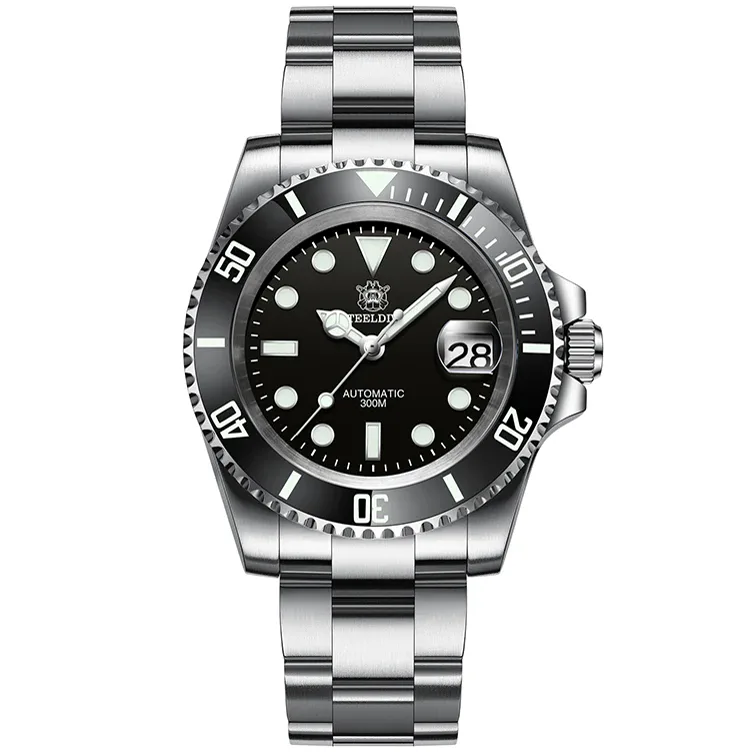
A dive watch is the one category where the spec sheet is nearly the whole argument. A dress watch can win on a dial and a field watch on a mood, but a dive watch is defined by a short list of printed numbers: a depth rating, a case height, a lug-to-lug measurement, a crystal and a movement. Those numbers are also where the compromises hide. A watch can look compact in a photograph and wear like a hockey puck, and the only way to tell is to read the sheet before you buy.
So that is how this guide works. Five picks, ranked on what each one prints, with the catch underneath. Where a brand does not publish a figure, we say so rather than guess, and we did not rank anything on a number we could not cite.
What the depth rating buys, and what it does not
Every pick here carries a rating of at least 200m, and one carries 300m. That number is on the dial or the caseback or both, and it is the first thing buyers compare. It is worth being precise about what we can and cannot say from it.
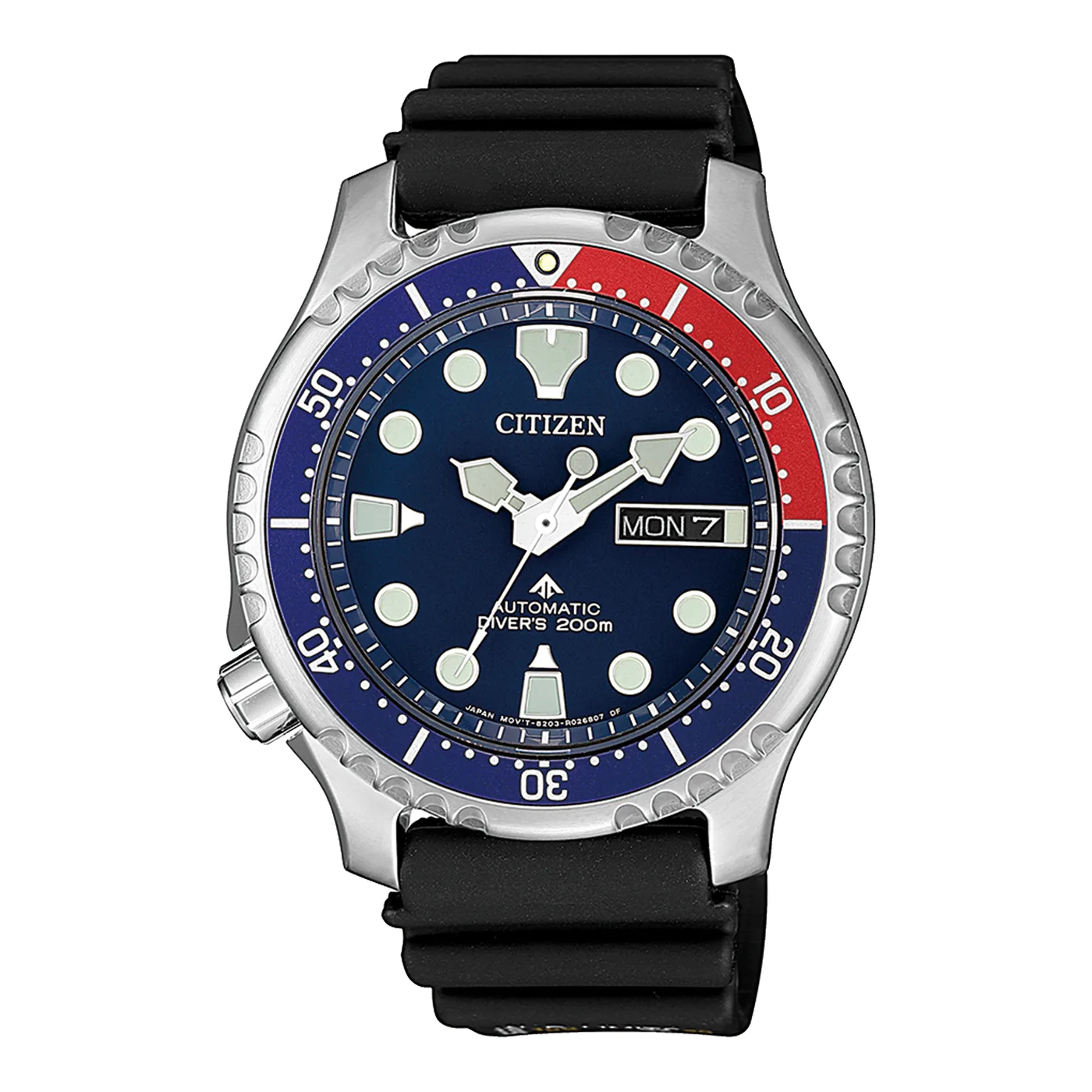
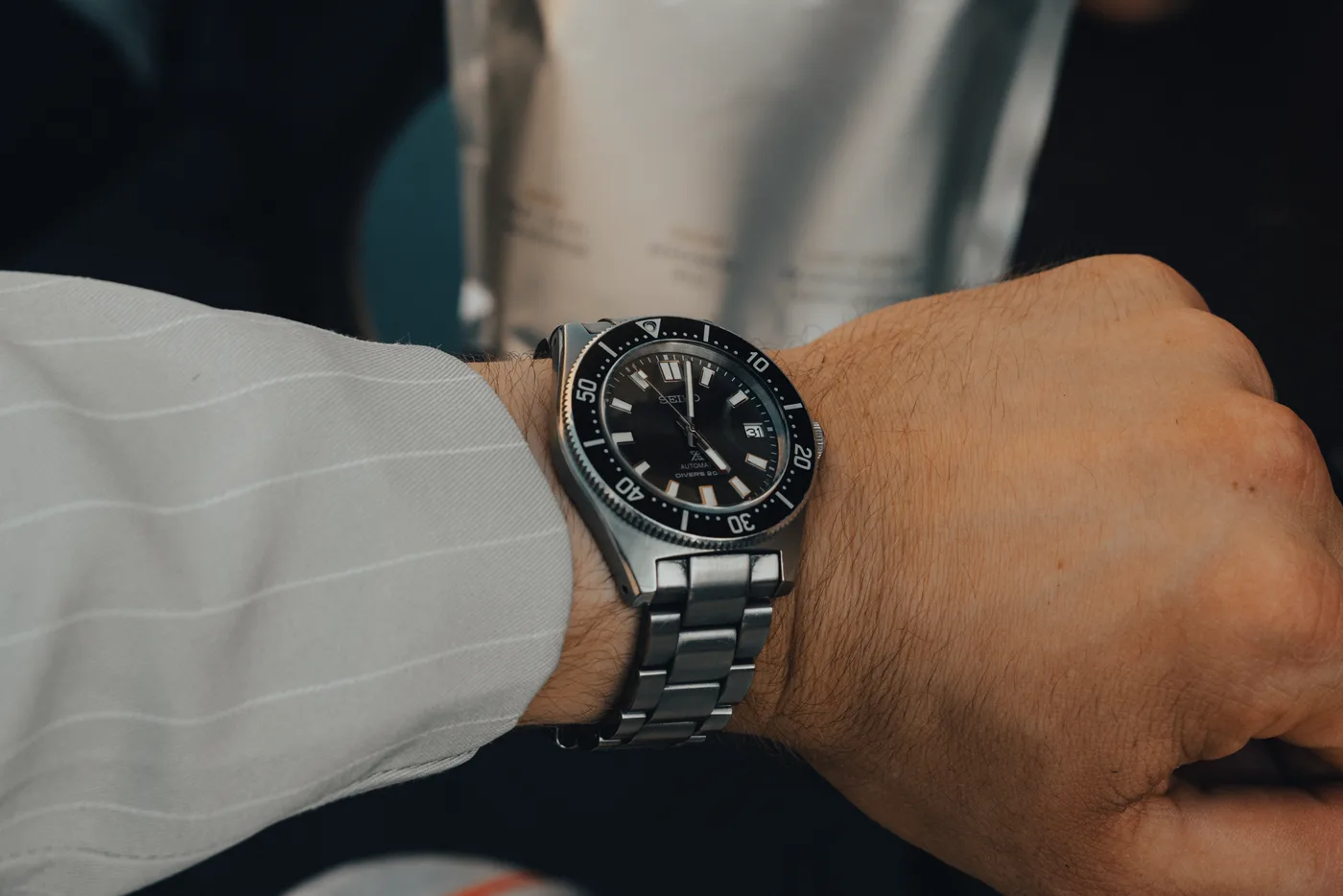
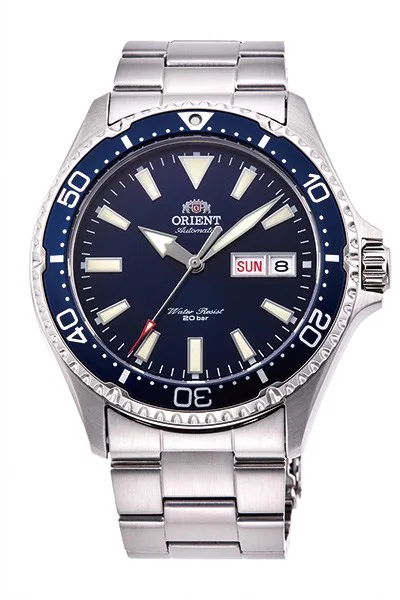
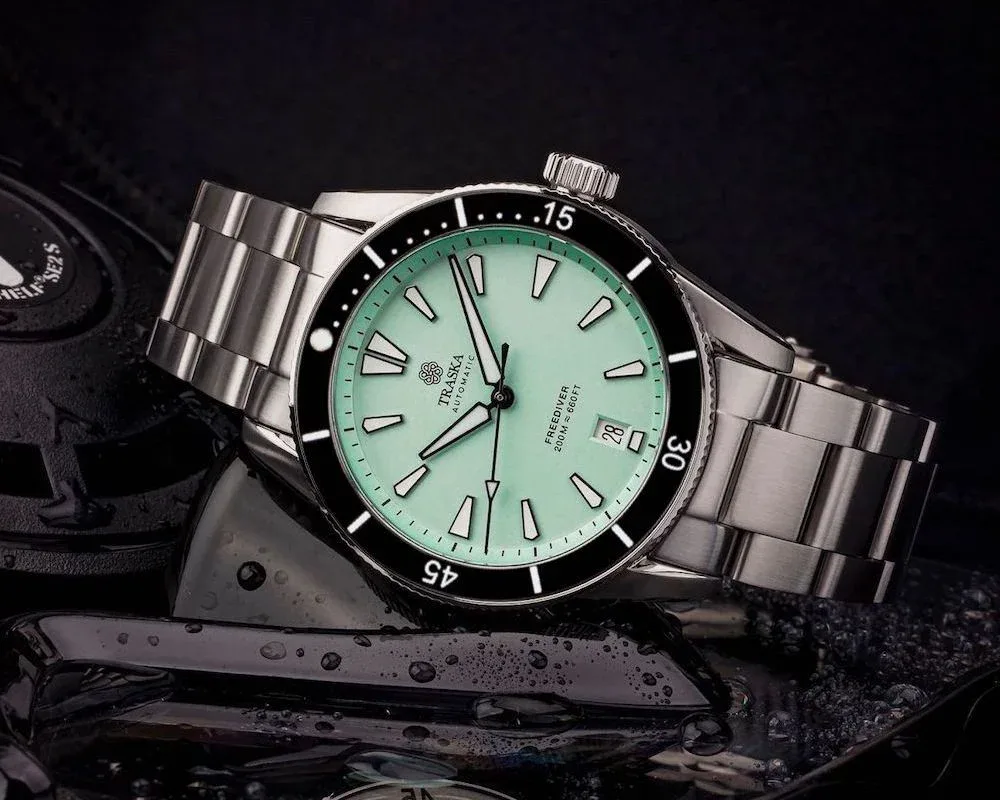
We can say what each maker prints. The Citizen Promaster prints 200m and the ISO-compliant Diver’s designation. The Seiko Prospex SPB143 prints 200m and calls it a Diver’s rating. The Orient Kamasu, the Traska Freediver and the Steeldive SD1953 print 200m, 200m and 300m respectively, with no Diver’s certification stated in our source set. That is a real difference in what is written down, and it is why the Citizen and the Seiko sit at the top of the list.
What we will not do is turn those numbers into advice about how deep or how long you should take one of these anywhere. The rating is the maker’s statement, and we repeat it as the maker’s statement. Several of the watches we passed over, such as the Pagani Design PD-1661 and PD-1671, print 100m, and the Cronos L6019 and Seiko 5 Sports SRPD55 also print 100m. They are fine watches at their price. They are not what this guide is about.
The numbers that decide whether you wear it
After the depth rating, the figures that matter are the ones almost nobody quotes in a headline: thickness and lug-to-lug.
Diameter is the number everyone knows, and it is the least useful of the three for a dive watch. Our five picks run from 40.5mm to 42mm across the dial, which sounds like a narrow band. The thickness figures tell a different story. The Traska Freediver is 11.9mm including its box sapphire dome. The Orient Kamasu is 12.8mm. The Seiko SPB143 is 13.2mm, and the Steeldive SD1953 is 13.3mm. That is a spread of 1.4mm, and on a wrist it is the difference between a watch that slides under a cuff and one that does not.
Lug-to-lug is the figure that decides whether a watch fits your wrist at all. The Kamasu is 47.0mm. The Seiko is 47.6mm, the Steeldive 47.7mm, and the Traska 48mm. If your wrist is small, a 48mm lug-to-lug will overhang no matter how reasonable the diameter sounds, and a 40.5mm case does not save you. The Citizen Promaster is the odd one out: Citizen does not publish thickness or lug-to-lug in our source set, so we can tell you it is 42mm across and nothing more about how it sits. If you are shopping on fit, that is the cost of the Promaster, and it is why it carries a catch.
A note on the watches we left off for the sake of fit. The Steeldive SD1969 lists a 56mm case including crown, 15.6mm thickness and a 1200m rating. The Steeldive SD1975 is 47.5mm without the crown and 15mm thick. Both are real, and both are bigger and thicker than anything we picked. The numbers are a fair reason to love them and a fair reason to pass.
Lug width and what it does to your strap drawer
Lug width is the smallest number on the sheet and one of the most practical. Most of our picks use a 20mm lug width: the Citizen, the Seiko and the Traska, as well as the Steeldive. The Orient Kamasu uses 22mm. The Kamasu’s wider lug width is a fact worth knowing before you plan a strap drawer, which is why its catch names it.
The Traska adds a detail worth reading closely. Its bracelet tapers from 20mm at the lugs to 16mm at the clasp, and it comes with quick-release spring bars. The Kamasu’s bracelet lists a foldover clasp with a safety catch. The Steeldive lists a six-position micro-adjust clasp. The Traska lists a tool-less six-position micro-adjust clasp. A bracelet is worth reading about as closely as a movement.
Reading the crystal line
Crystal material is a line on the sheet worth reading. Four of our five picks print sapphire: the Seiko, the Orient, the Traska and the Steeldive. The Traska goes further with a box-style double-domed sapphire with an anti-reflective coating on the underside. The Seiko and the Steeldive list AR coating.
The Citizen Promaster prints a mineral crystal. That is why its catch exists, even with the highest hypescore in the guide. A mineral crystal is a trade, and a buyer who wants sapphire should weigh it against the rest of the list.
There is a related point about domes. A domed crystal adds to the height of a watch, and the Traska is explicit about it: 10.5mm case plus the dome gives 11.9mm. When a brand lists a height, check whether it includes the crystal. The Seiko lists 13.2mm, and the Kamasu lists 12.8mm, so we are working from the numbers the makers publish.
Movements, in plain terms
Movements in this guide fall into three groups, and the sheet does tell you which.
The first group is the Miyota family. The Citizen Promaster uses the 8203 and the Traska uses the 9039 or the 9015 if you want a date. The Traska prints a 42-hour reserve and says that the movement hacks and hand-winds. The Citizen does not print a power reserve in our source set, so we say nothing about it.
The second is the value end. The Steeldive SD1953 uses an NH35 with a 41-hour reserve. The Orient Kamasu uses the F6922, which hacks and hand-winds, with approximately 40 hours. Their hypescore movement sub-scores of 17 and 21 reflect that.
The third is the Seiko SPB143 with the 6R35 and a 70-hour reserve. It has the top movement sub-score of the guide at 23, and the longest reserve of any watch we picked. The extra hours are the whole difference between it and the 40-hour movements here. We make no accuracy claim for any of them.
How we ranked them
The order follows the hypescore, which is the number printed on each pick, and the catches do the rest of the work. The Citizen leads at 88. The Seiko follows at 87, the Orient and the Traska tie at 86, and the Steeldive closes at 82. We did not break the Kamasu and Traska tie with taste: the cheaper watch goes first because the totals match and the price band is lower. That is a rule, not a rave, and you are free to disagree with it.
It is also worth saying what a hypescore cannot do. It folds movement, build, value and wearability into one total, and two watches with the same total can be very different objects. The Traska scores its points on build and wearability, while the Kamasu scores them evenly. Read the sub-scores in each pick before you read the total, because the sub-scores tell you where the money went.
What we left out, and why
An honest dive list leaves a few famous names out, and tells you why.
The Rolex Submariner 124060 and the Tudor Black Bay 58 both score 88 on the hypescore, matching the Citizen. The Rolex prints a 300m rating, a 70-hour reserve and a price band of $10,050 to $14,500. The Tudor prints 200m, a 65-hour reserve and a price band of $4,975 to $5,350, in a 39mm case that is 11.7mm thick with a 47.8mm lug-to-lug. They are excellent watches. They are also priced far above the others in this guide, and a ranking that put them first would be a ranking of budgets. If your budget allows them, you do not need us to explain them.
The Baltic Aquascaphe Classic ($735, 77) and the Aquascaphe MK2 ($770-800, 78) are close in price to the Traska and score lower on the hypescore, with lower value sub-scores (18 and 17 against the Traska’s 20). The San Martin SN0121T at $265 to $295 prints 300m and a titanium bracelet and scores 81. It is a strong watch, and it is a candidate for the next wave of this guide as it grows. The Lorier Neptune Series IV is discontinued and has been superseded by a reissue, so we did not recommend it. The Seestern S434, at $190 to $230, is a reasonable alternative to the Steeldive and scores 74.
This guide launches with five picks and grows to eight. Five watches we can cite line by line beats eight we cannot.
Who should buy which
If you want the most defensible spec sheet at the lowest price that still prints a Diver’s certification, buy the Citizen Promaster. You give up sapphire and you give up a lot of published dimensions, and you gain a Diver’s certification no other pick under $500 prints.
If you want one watch for the long run and the budget runs to $1,100, buy the Seiko SPB143. It has the best movement score and the longest reserve of the five, and it is a full spec all the way through. Check the 47.6mm lug-to-lug against your wrist first.
If you want a bracelet diver with sapphire and no fuss for less than $400, buy the Orient Kamasu. Its sub-scores are all within a point of one another.
If the bracelet is what you care about, and you want the slimmest case that publishes a thickness, buy the Traska Freediver. The 11.9mm thickness and the tapered, micro-adjustable bracelet are the reasons, and the price is the cost.
If you want to see whether you even like dive watches before you commit, buy the Steeldive SD1953. At $139 to $149, a 300m rating with sapphire is a lot of printed spec. Mind the 13.3mm thickness.
And if none of those fits, read the lug-to-lug number twice before you buy anything. It is the figure that decides whether the watch fits.