A watch is the hardest thing to give well, because the recipient’s wrist is a fixed fact the giver almost never knows. A shirt can go back. A book can be wrong and still be read. A watch that is too large sits on the wrist like a dinner plate and a watch that is too small looks like it belongs to someone else. So this guide starts from a different place than most. The question is not which watch is best. It is which watch is least likely to be wrong when you cannot try it on the person.
That changes how you read a spec sheet. Case diameter gets the headlines, but it is the least useful number on its own. Lug-to-lug, the distance from the tip of one lug to the tip of the other, is what decides whether a watch overhangs a narrow wrist, and thickness decides whether it catches on a cuff. Where the inventory publishes those numbers we print them. Where a brand does not publish them, we say so and treat the missing number as a risk the giver is taking on.
Four picks. Every one comes with a catch printed underneath it, because a gift guide that only lists strengths is a sales page with a ranking on top.
How the ranking works. Rank one is not the highest hypescore. The Casio carries the highest total of the four at 88 and sits third, and the Presage carries 81 and sits first. The ranking asks how little each watch demands from the giver, and how many ways it can go wrong on the day. A watch scoring 88 for build and value can still be a worse gift than one scoring 81 with a friendlier case, because the extra points are earned on things the recipient may never notice while the case size is noticed every minute of every day. We keep the hypescore on every pick so you can see the trade being made, and the sub-scores are quoted in the pick text where they explain the ordering.
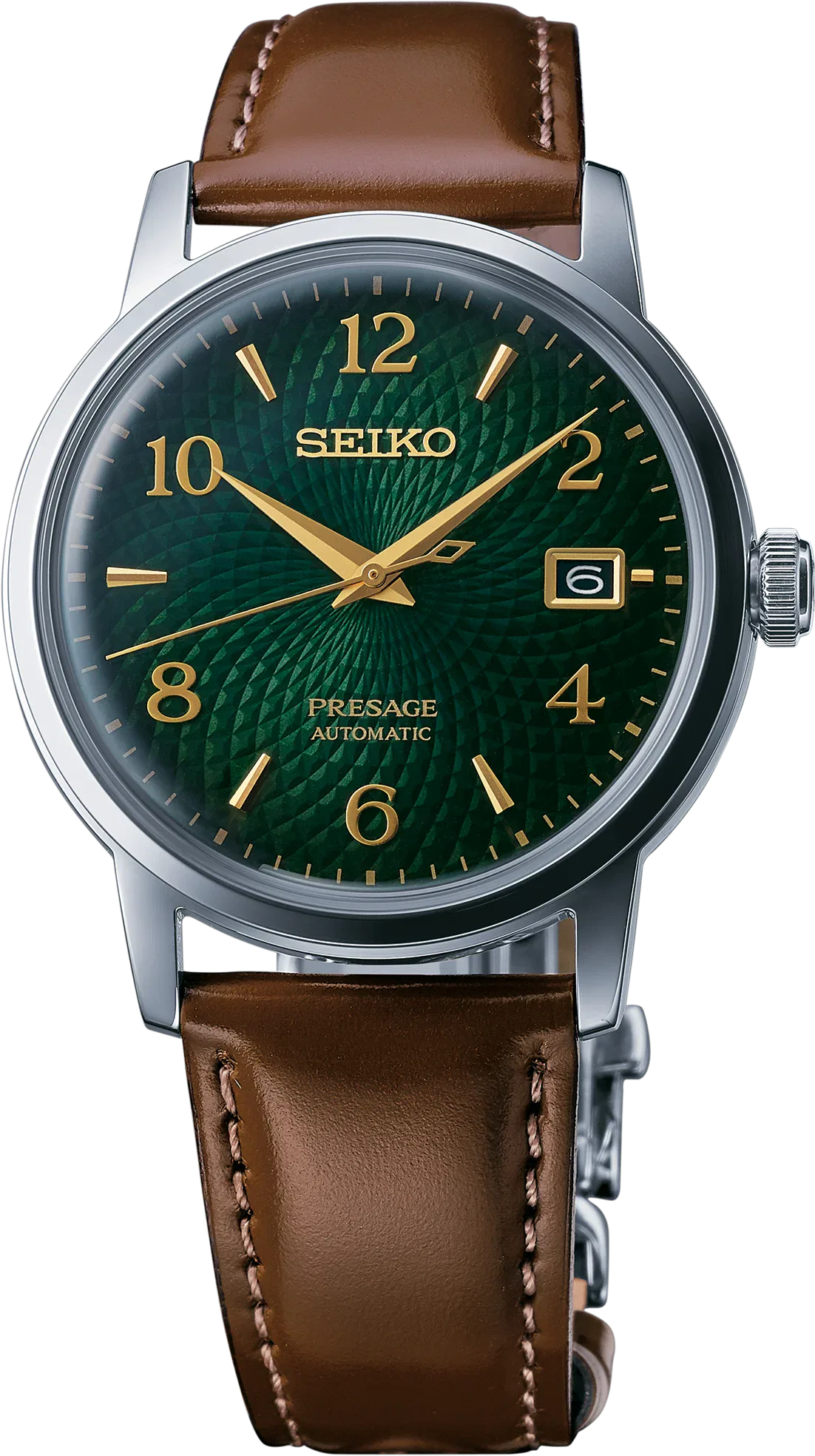
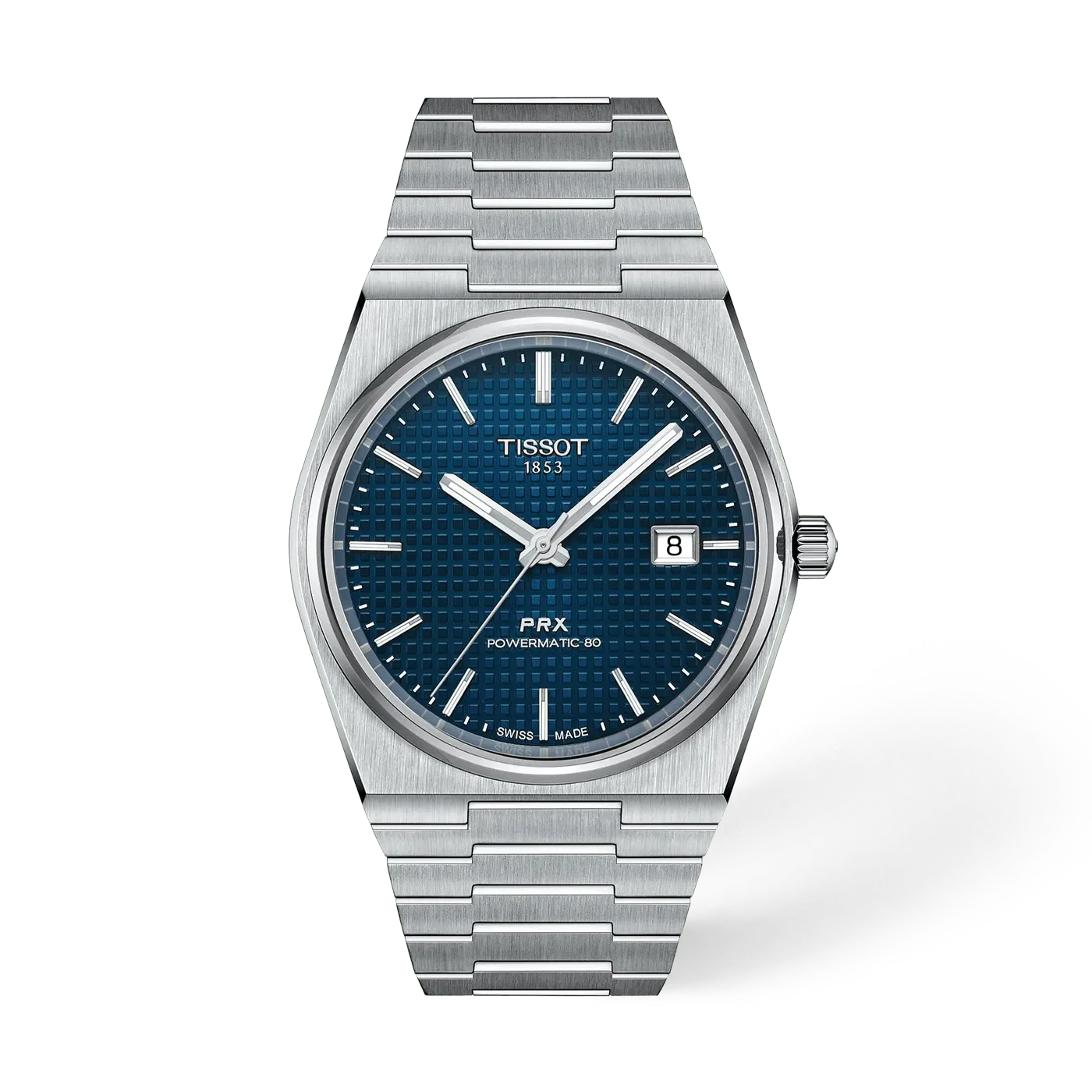
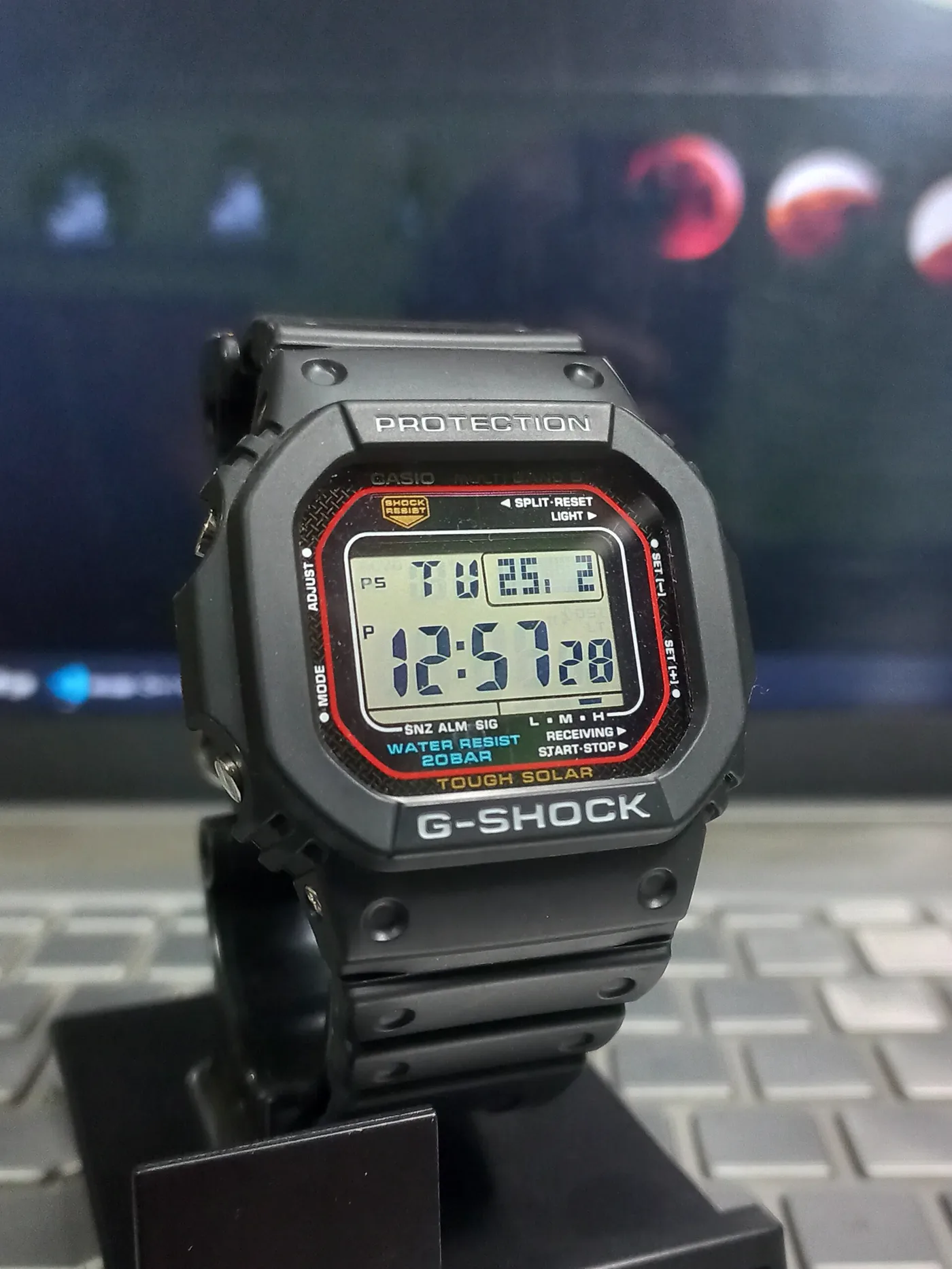
Start with the dimensions, because that is where gifts fail. The most common trap is going by diameter alone. A 40mm watch with a short lug-to-lug can wear smaller than a 38mm watch with long lugs. The Presage is 38.5mm with a 45.4mm lug-to-lug and an 11.8mm thickness, which is a modest, balanced set of numbers. The Tissot PRX is 40mm and 10.9mm thick, but its lugs are part of the integrated case, so Tissot gives no separate lug-to-lug and no standard lug width. That is not a flaw in the watch, but it does mean you cannot compare its footprint to the others on one line, and you should not pretend you can. The Timex Marlin is 34mm and 10mm thick, and it is the small outlier. The Casio is 43.2mm wide and Casio does not publish a lug-to-lug for its one-piece case and band, which at that width is the number you would most want.
If you know nothing about the wrist, the middle of the range is the safe bet. Watches around 38 to 40mm are where the inventory clusters, and they are where most wrists forgive the most. The cases in this guide that sit there are the Presage and the PRX. If you know the wrist is small, drop to the Timex. If you know the person already wears a chunky sports watch, the Casio is the logical pick. If you know none of that, ask a friend, or look at what is on the wrist the next time you see them. One glance is worth more than any ranking in this guide.
Next, the strap and bracelet question, which is the second way gifts go wrong. A leather strap on quick-release spring bars, as on the Presage and the Timex, is a gift that can be changed. If the recipient dislikes leather, a new strap costs little and takes a minute. The Presage runs on a 20mm lug width and the Timex on an 18mm lug width, so keep those numbers if you want to add a second strap as a present with it. A steel bracelet looks more expensive, but a bracelet that does not fit is a trip to a jeweller. The PRX has an integrated bracelet, and an integrated bracelet is the least forgiving design in this guide, since there is no standard lug width to fall back on and Tissot lists a butterfly clasp with no micro-adjust. If you buy the PRX, buy it knowing the bracelet will need sizing, and put the receipt where the recipient can find it.
Then the movement, which the giver tends to over-think. For a gift, the movement is mostly about what it asks of the owner. The Casio is the zero-ask option: solar-charged, with Multi-Band 6 radio sync, no winding and no routine. The Seiko 4R35 and the Tissot Powermatic 80 are automatics, which run off wrist motion and keep running over a rest day on their reserves, roughly 41 hours for the Seiko and 80 hours for the Tissot. That difference is the practical one. A watch with an 80-hour reserve survives a weekend on a desk; one with 41 hours may need a few turns of the crown on Monday. The Presage does hack and hand-wind, so the restart is simple. The Timex is hand-wound only, with a stated reserve of about 40 hours, so it needs winding every day or two. That is lovely for the right person and an irritation for the wrong one. Think about whether the recipient wants a daily habit or just a watch.
Water resistance is the number most often misread by a gift buyer. The inventory prints ratings, and we print them: 50m on the Presage, 100m on the PRX, 200m on the Casio, 30m on the Timex. We are not going to translate those into advice about what the recipient may do in the water, because the rating on the page is the only thing the page supports. What the numbers do say is that the four picks are not equal, and that the Presage is explicitly described by Seiko as not a diver’s rating. If the person you are buying for lives near water, read the rating on the spec line before you read the review.
Crystal is the other line to read. A gift is meant to look good for years, so the crystal is worth a line. The Tissot has sapphire. The Presage has box-shaped Hardlex, which is mineral and not sapphire, and the Casio is mineral. The Timex is domed acrylic. If the crystal matters to you, the Tissot is the only pick of the four with sapphire. If they will wear the watch hard, the Casio carries the highest build sub-score here, 24.
Price is the last variable and the one that most people get backwards. Spending more does not make a gift fit better. At the cheap end the Casio, at $100 to $150, buys the highest hypescore here. The Timex at $239 to $259 buys the smallest case and a ritual. The Presage at $380 to $450 and the PRX at $650 to $725 buy more finish and more movement, and the price steps are real. There is a point where a gift becomes an obligation, because the recipient feels they have to wear it. That point is lower than the buyer thinks. If you are unsure, buy one price step below where you were going to land and use the difference on a good strap.
Now, what to skip, because a gift guide that names no skips is not doing its job.
Skip the very small and very large. The inventory has a few watches built far outside the range most wrists tolerate. The Steeldive SD1969 is 56mm including the crown, with a 48mm lug-to-lug and a mesh bracelet, and it carries a wearability sub-score of 15. The Steeldive SD1975 is a 47.5mm case, 15mm thick, with a wearability sub-score of 16. They are honest watches with real ratings, 1200m on the first and 300m on the second, and they are exactly the wrong thing to give to someone you have not measured. At the other end, the Cartier Tank Must is 33.7mm by 25.5mm and $3,900, which is not a gift you hand over to a stranger’s wrist without being sure of it.
Skip anything that may not be there when they open it. A gift is a promise with a date on it. The Cronos 36mm Explore L6019 had every colour variant reading sold out when we fetched its page, and the San Martin SN0121GA carries a note about sold-out status against the maker’s own storefront. The Lorier Neptune Series IV is documented as superseded by a newer generation with a different crystal and movement, so a listing for it is a discontinued watch and not a current one. A gift guide is no place to send you hunting.
Skip anything where the sources disagree. The Seestern S456 GMT lists 200m on one storefront and 100m on another, and the inventory says to treat the rating as unconfirmed. That is the right call for a watch you want to be sure of, and an even better reason to pick something with one clear number. A gift should not come with an asterisk.
Skip the grails. A Rolex Submariner is $10,050 to $14,500 and a Grand Seiko Snowflake is $6,795 to $6,900. Those are lovely watches, and if you are giving one you already know the recipient well enough that this guide was never going to help. A first watch for someone else is better small, cheap enough to be a pleasure and clear enough to be worn.
A note on the cheapest option we left off. The Casio F-91W is 35.2mm wide, 8.5mm thick and 38.2mm lug to lug on an 18mm lug width, and it costs $18 to $25. That is a very fitting set of numbers for almost any wrist, and it is a fine stocking-filler. We kept it out of the ranked picks because it carries the weakest build sub-score in the inventory, 12, and a gift that needs a second thought about durability is not the one we want to rank. If you want a joke gift or a gift for a child, it is a better idea than it sounds. For anything meant to mark an occasion, step up.
So the short version. If you can afford the Presage and know nothing else about the wrist, buy the Presage. If you want the one with the most name recognition and are happy to deal with bracelet sizing, buy the PRX. If the person is hard on things, or never wants to think about their watch, buy the Casio. If the wrist is small, buy the Timex and tell them it needs winding. In every case, keep the receipt.
This guide launches with four picks and plans for six. Four watches we can cite line by line beats six we cannot.