Two thousand dollars is an awkward number. It is not cheap enough for the spec sheet to do all the work, and it is not expensive enough for the watch to justify itself on name alone. Under $500, every extra dollar buys something measurable. Above $5,000, you are paying for finishing, history and a logo that holds its value. In between, the money splits three ways, and a good part of reading this category is knowing which of the three you are paying for.
The first thing the ceiling buys is time. Look at the power reserves in the inventory. The Seiko Prospex SPB143 runs 70 hours. The Tissot PRX runs 80. Both are automatic movements you can set down on Friday evening and pick up on Monday morning with the watch still going. The Traska, at 42 hours, will not manage that, and the Christopher Ward and the Junghans, at 38 hours each, will not either. Nobody should buy a watch on reserve alone, but it is the single most practical number on the sheet and it is the first one worth reading. Here, two of our five run well beyond 42 hours.
The second thing the ceiling buys is case work. Sapphire stops being a talking point at this level and becomes the baseline; all five picks have it. What changes is the shape. The Traska has a box-style double-domed sapphire. The Junghans has a domed sapphire with anti-reflective coating. The Seiko has AR-coated sapphire on a Diver’s-rated case. These are details the cheaper end does not usually bother with, and they are the reason the build scores here sit at 22 and 23 for the strongest picks.
The third thing it buys is the name, and this is the one the inventory cannot score for you. We rank on Hypescore, which is movement, build, value and wearability added together, and it does not price in a logo. That matters because the ceiling sits close to some expensive neighbours, and it is worth looking at what they cost.
What sits just above the line
The Longines Spirit is the closest call. It is a 40mm COSC-certified chronometer with a silicon balance spring, a 72-hour reserve and 100m of water resistance, and its Hypescore is 83. It is also priced at $1,850 to $2,550. Part of that band is under $2,000 and part is over, and we do not guess which part you will find. A budget guide that says “under $2,000” should mean the whole price band sits under $2,000, so the Spirit is out. It is a good watch. It is just not a promise we can keep.
Past that, the numbers change fast. The Tudor Black Bay 58 is $4,975 to $5,350 and scores 88. The Rolex Submariner 124060 is $10,050 to $14,500 and also scores 88. The Omega Speedmaster Professional is $6,650 to $7,800 and scores 83. The Grand Seiko Snowflake is $6,795 to $6,900 and also scores 83. The Tank Must from Cartier is $3,900 and scores 71. Compare those to our top pick. The Seiko Prospex SPB143 scores 87 and tops out at $1,200. That is one point below the Tudor and the Rolex, at a price ceiling that sits under a quarter of the Tudor’s floor.
Those are Hypescore totals, and they have a limit. The value score is where the gap shows. The Tudor’s value score is 17, the Rolex’s is 18, the Omega’s is 15, the Grand Seiko’s is 14 and the Cartier’s is 13. The Seiko’s is 20. If you can afford the Tudor, you are not choosing it because it is a better deal. You are choosing it for the movement, the build and the wrist presence, and those are real reasons. But a guide about spending under $2,000 is a guide about the deal, and the deal is on this side of the line.
How to read the sheet at this price
Start with the movement line, and then read two numbers next to it: the reserve and the crystal. The Seiko 6R35 and the Tissot Powermatic 80 are the two long-reserve movements here. The Miyota 9039 in the Traska is a different kind of movement; it hacks, it hand-winds, and it gives you 42 hours. The Sellita SW200-1 in the Christopher Ward gives you 38. The Junghans J800.1 gives you 38 as well, with hacking and hand-winding. If you wear one watch every day, reserve is a convenience. If you rotate several, it is the number that decides whether the watch is running when you reach for it.
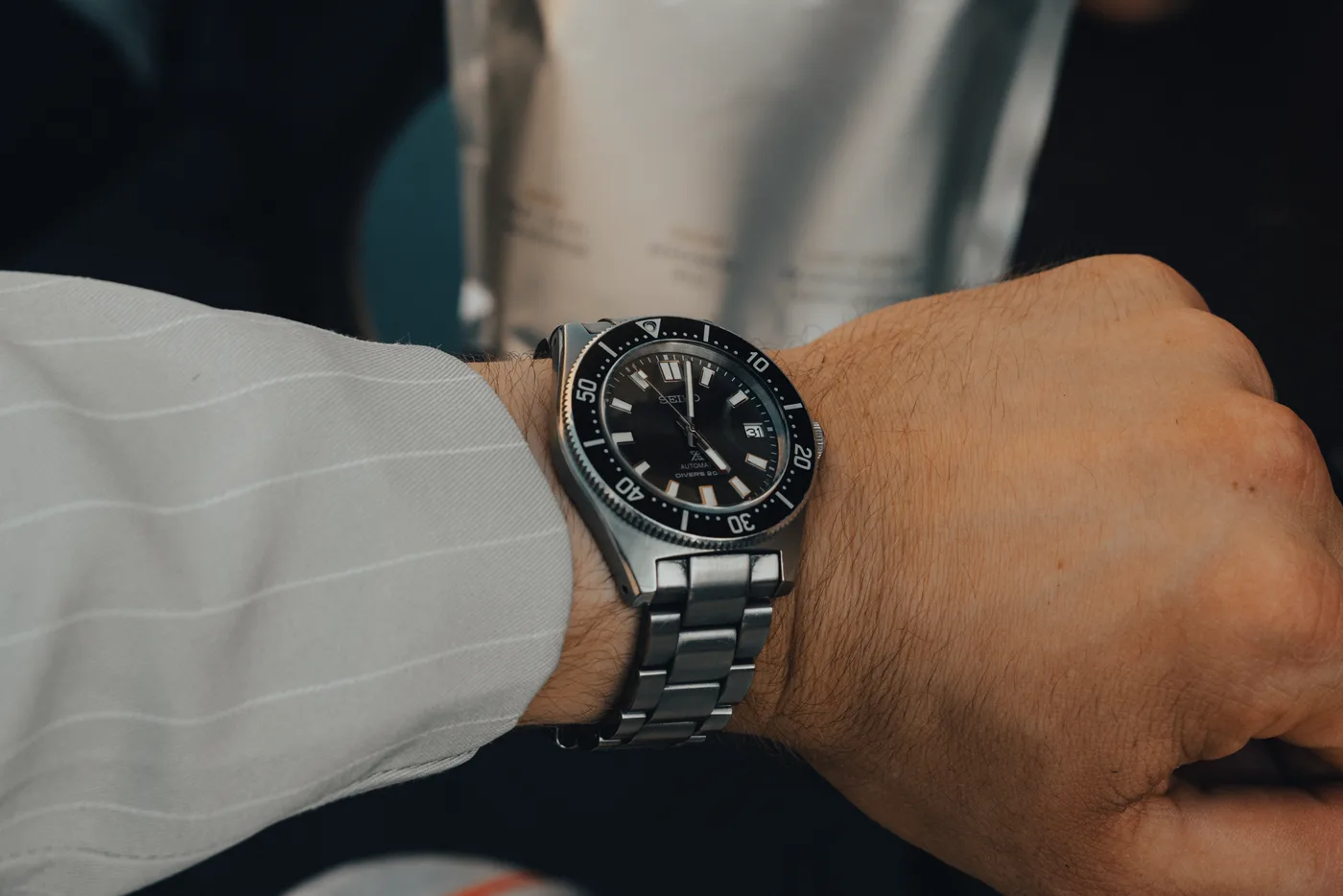
Then read the dimensions as a set. Case diameter on its own tells you very little. Look at thickness and lug to lug, where the inventory publishes them, because those decide how the watch sits. The Seiko is 40.5mm across, 13.2mm thick and 47.6mm lug to lug. The Traska is 40.5mm across, 11.9mm thick and 48mm lug to lug. They share a diameter and differ by 1.3mm in height. The Christopher Ward is 40mm and 9.95mm thick, and the Tissot is 40mm and 10.9mm thick, both integrated designs with no separate lugs, so lug to lug is not published for either. The Junghans is the smallest at 38mm and 10.0mm thick, though Junghans does not publish its lug to lug. A thinner watch slides under a cuff; a taller one does not. Diameter is the number everyone quotes and the least useful one.
Next comes the water resistance line, and this is where you need to read carefully. The Seiko is rated 200m and is described as a Diver’s watch. The Traska is rated 200m. The Tissot and the Christopher Ward are rated 100m. The Junghans is rated 5 bar, and Junghans states in writing that this is rain and splash resistance and not a rating for swimming. We print the ratings as the makers give them and we do not translate them into advice about what you should do in the water. If a rating matters to how you live, read the maker’s own page. All we can honestly say is which number is on it.
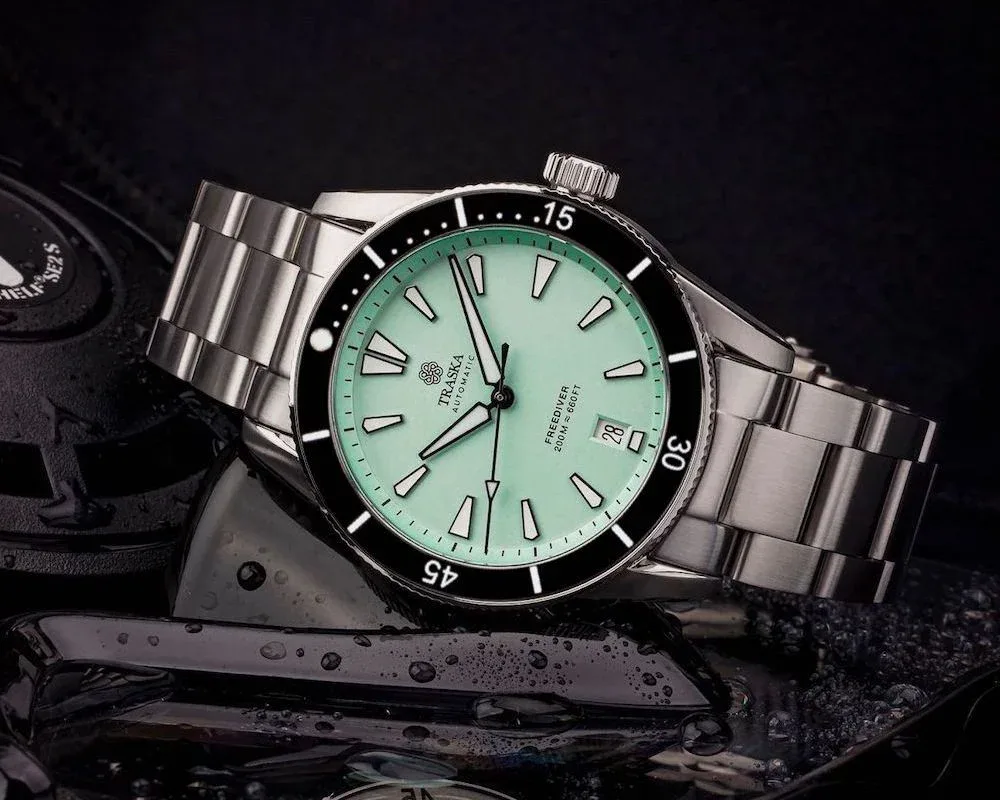
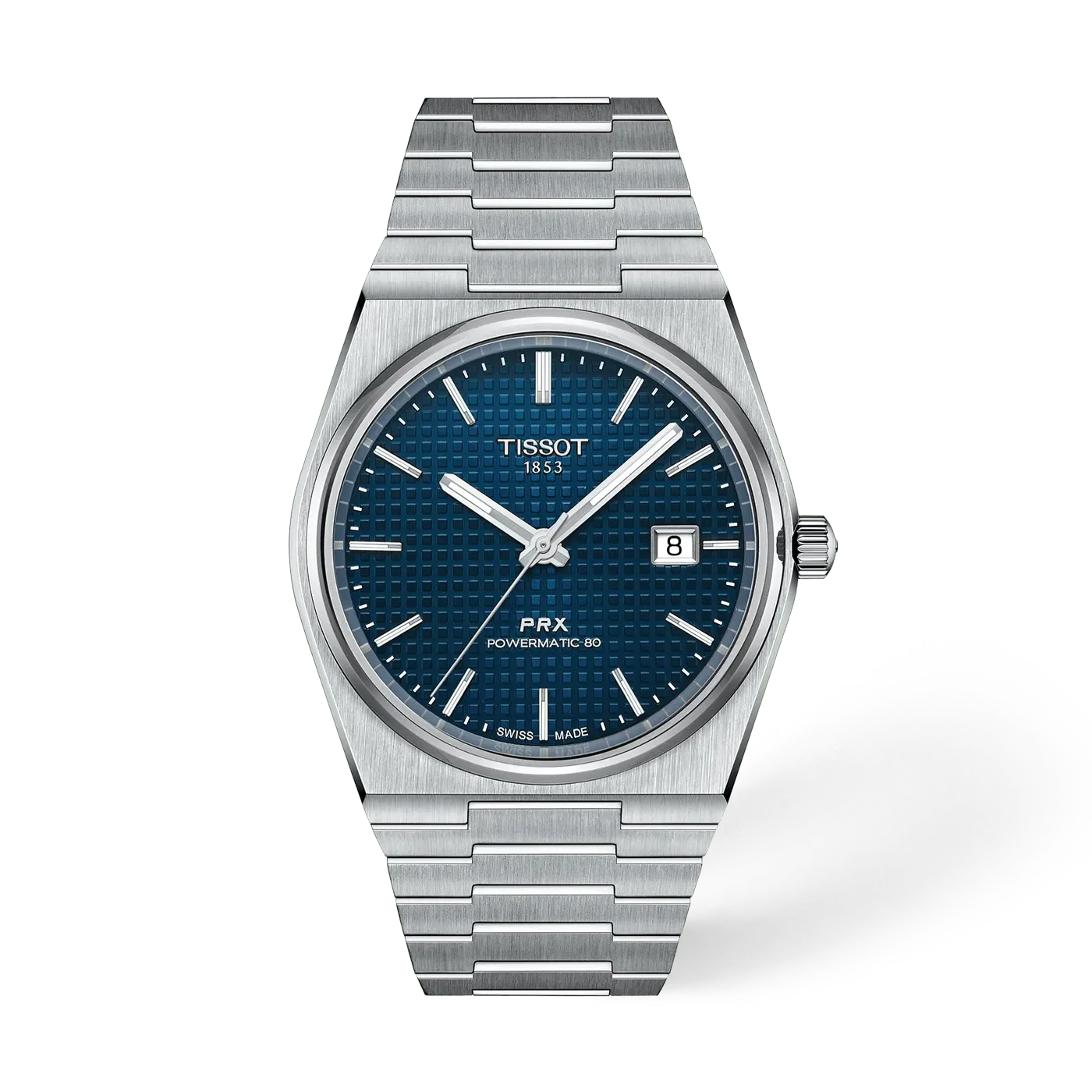
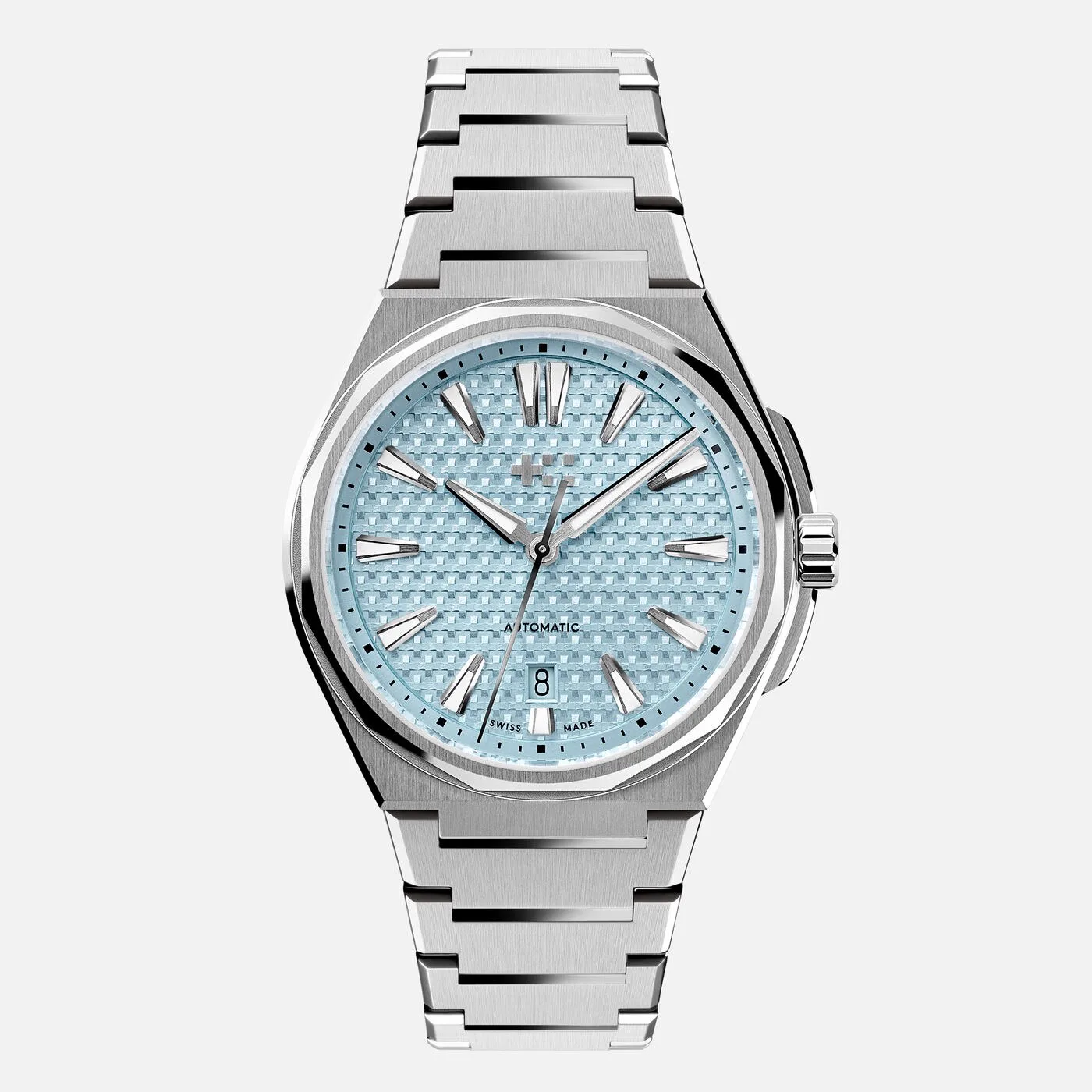
Finally, read the clasp and the strap, because at this price the bracelet is often the difference between two watches that otherwise look alike. The Traska and the Christopher Ward both have micro-adjust clasps; the Traska’s offers six positions and the Christopher Ward’s three, both without tools. The Tissot has a butterfly clasp with no micro-adjust. The Seiko has a steel three-link bracelet at 20mm. The Junghans comes on a black leather strap with a steel pin buckle. An integrated bracelet, as on the Tissot and the Christopher Ward, can only be worn as it came. A watch with a standard lug width has options. The Traska tapers 20mm to 16mm and has quick-release spring bars, so a strap change takes a minute. None of this appears in a Hypescore headline, but it is part of why wearability scores differ.
The five, and who each one is for
The Seiko Prospex SPB143 is the pick for most people, and it is number one for a plain reason. It has the highest movement score on the list at 23, a reserve of 70 hours, a Diver’s rating and a sapphire crystal. It does not win any single category by a wide margin. It wins because it does not lose anywhere. The only real cost is size: 13.2mm thick is a lot of case. If that is a problem for you, move to the Traska or the Tissot.
The Traska Freediver is for the person who cares about how a watch is built more than what it says on the dial. Its build score of 23 is the highest in the guide, and the details back it up: the box sapphire, the solid end links, the tool-less clasp, the quick-release bars. It is $685 to $735, which makes it noticeably cheaper than the Seiko, and it gives up reserve to get there. If you do not mind winding it on a Monday, it is the stronger buy per dollar of hardware.
The Tissot PRX Powermatic 80 is the value play. Its value score of 23 is the highest of the five, and it has the longest reserve at 80 hours, a sapphire crystal and a slim 10.9mm case. It is the least expensive watch here, starting at $650. The catch is the clasp and the integrated bracelet, which together leave you no room to adjust or swap. If the bracelet fits you on day one, there is nothing to complain about. If it does not, there is not much to be done.
The Christopher Ward The Twelve is for the person who wants the PRX shape with a better clasp and does not mind paying for it. It is thinner, at 9.95mm, it has the micro-adjust the Tissot lacks, and its Hypescore is 83. Its 38-hour reserve is the weak point and its price band, $1,150 to $1,395, is high next to the Tissot’s. We cite Christopher Ward’s manufacturer domain rather than a deep product page, because the direct product URL could not be verified when we built the guide. We say so because you would otherwise assume we read more than we did.
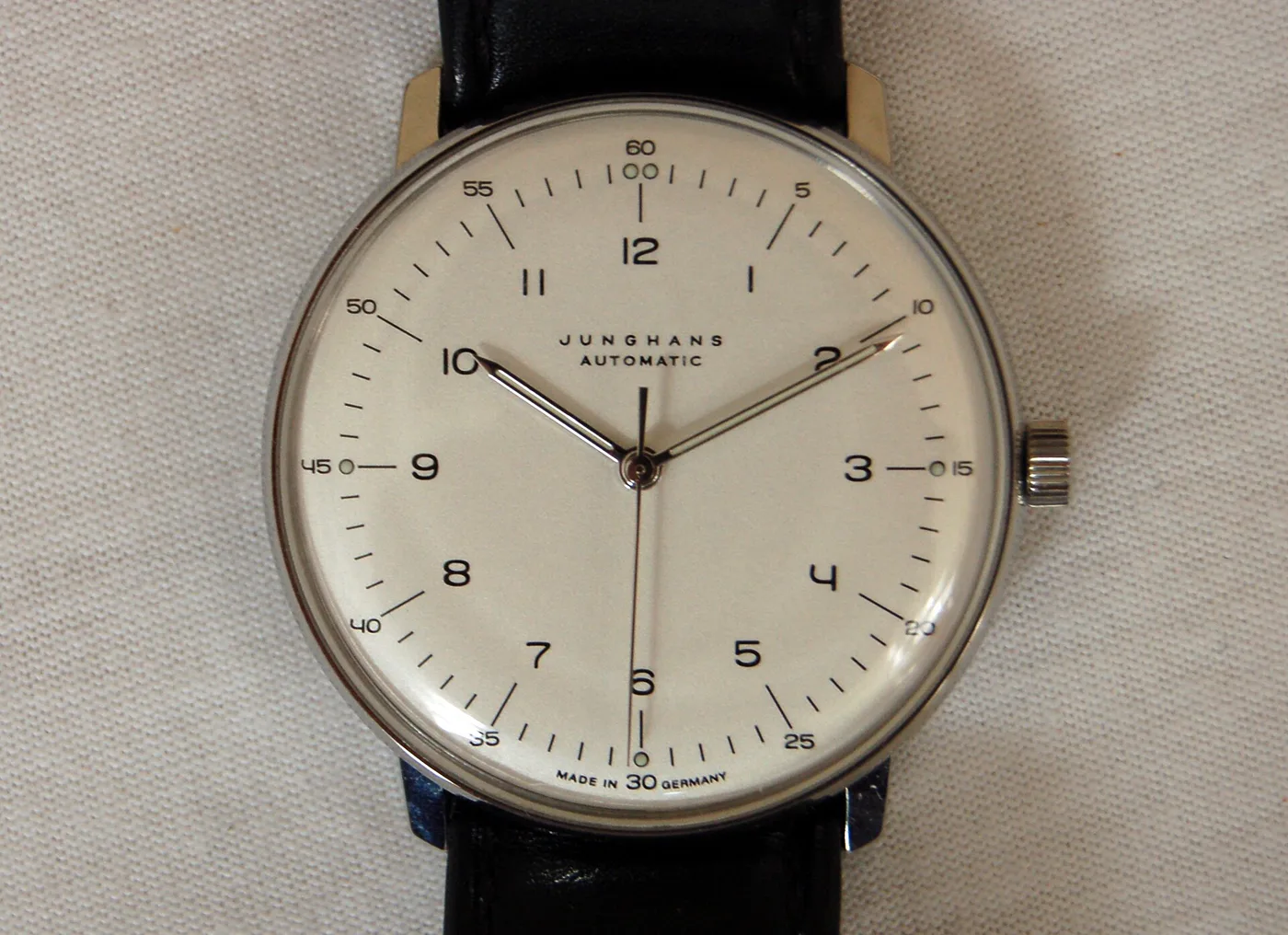
The Junghans max bill Automatic is the odd one out, and it is here on purpose. Its Hypescore of 73 is the lowest, its value score of 15 is the lowest, and its price band of $1,595 to $1,695 is the highest. On paper it loses to everything else. It is also the only real dress watch on the list: 38mm, 10.0mm thick, a domed sapphire and a dial that has barely changed in decades by Junghans’ own account. If you want a watch that is quiet and flat and works under a shirt cuff, the numbers will not persuade you and the design might.
What to skip
Skip the Seiko if you will not wear 13.2mm of height. Skip the Traska if reserve matters to you more than hardware. Skip the Tissot if you need to fine-tune a bracelet fit, and skip the Christopher Ward if you are tempted by the Tissot’s price and would never use the clasp. Skip the Junghans if you want to swim in it, and read what Junghans actually says about its rating before you decide.
Beyond the five, skip anything that tries to sell you the name alone. At this price, a famous badge is not a spec. If a watch is on a shortlist for the logo, check its Hypescore and its value score against the ones above before you commit. The Omega, the Grand Seiko and the Cartier all score below the Seiko, and the Tudor and the Rolex are one point ahead.
Skip, too, the idea that the cheapest option in the category is the smartest. The Under $500 guide covers what a smaller budget does well, and it is excellent. But the money between $500 and $2,000 buys things the cheaper end cannot: a reserve of 70 to 80 hours, a bracelet that fits properly, a case that is 9.95mm or 10.9mm instead of 13mm or more. Those are real differences and you will notice them every day.
What we left out, and why
We left out the Longines Spirit because its price band crosses $2,000. We left out every watch whose spec sheet is too thin to rank honestly. The Swatch Sistem51 has a 90-hour reserve, but Swatch does not publish its case size, water resistance or crystal in our verified source set, and we will not rank a watch on a single number. Where a maker has not published a figure, the inventory says so, and so do we.
We also left out watches that sit far below this ceiling, because a $2,000 guide is not the place to list them. The Citizen Promaster NY0086 and the Casio G-Shock GW-M5610U both score 88, higher than anything above, and both cost a fraction of the ceiling. They are not here because this guide ranks what the extra money buys, and those two make a good case that for many people it buys very little. That is worth saying plainly. If your real question is what is the best watch you can get, the honest answer starts below $400. If your question is what you get for stretching to $2,000, the answer is above.
This guide launches with five picks and is planned to grow to eight. Five watches we can cite line by line beat eight we cannot, and when the next three arrive they will have to clear the same bar: a whole price band under the ceiling, every figure traceable to a maker’s page, and a catch printed underneath.